
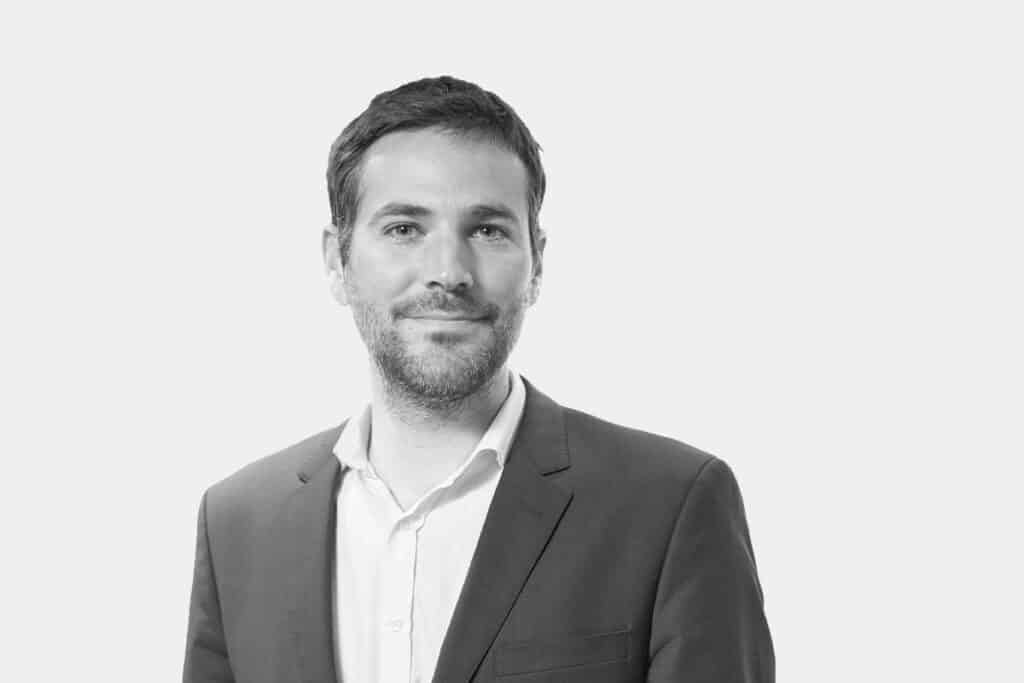
Etienne Moreau, Partner at Supernova Invest
Founded in the Grenoble valley within the CEA, Supernova Invest has seen deeptech evolve from a scientific niche into a core pillar of European venture capital. For Étienne Moreau, partner at the fund, the issue is not innovation but capital depth: exits that come too slowly, an unfinished single capital market, and fragmented public procurement. He argues for a genuine European scale-up market, capable of turning scientific excellence into economic power.
Forbes France: Supernova Invest was founded twenty-five years ago in the Grenoble valley. How does your history help explain the moment deeptech is experiencing in Europe today?
Étienne Moreau: Supernova Invest was founded twenty-five years ago in the Grenoble valley, within the CEA. At the time, we were deeptech investors before the term even existed. What was then a very scientific niche has become, in just a few years, a core category in venture capital.
Five years ago, deeptech represented 15 to 20% of deal flow. Today, it accounts for roughly 60%. That shift reflects profound technological breakthroughs. In data centres, computing power is now measured in billions of billions of operations. In medtech, genome sequencing can be completed in under 24 hours. These are concrete revolutions. And they are what attract large pools of capital.
How would you describe today’s global technology landscape, and Europe’s position within it?
E. M.: The major technological trends we are seeing today did not start with Trump, neither Trump 1 nor Trump 2. They were already in motion. What we are witnessing now is American exuberance. Investment volumes are soaring. Acquisitions are accelerating. New funds are being launched at scale.
Sequoia has just raised a €750 million seed fund. Our own vehicles are closer to €100 million. The gap is clear. At the same time, there is alignment between Trump’s commercial vision and the expansion of US tech. American tech giants are doubling down on breakthrough innovation, globally, with unprecedented firepower.
This dynamic spills over into Europe. Nvidia’s investment in Scintil Photonics is a good example. Capital now circulates globally, and American players are setting the pace.
In that context, is the French and European ecosystem still dependent on US capital, or is it catching up?
E. M.: Europe still benefits heavily from US capital. That is undeniable. But the picture is changing. Over the past few years, Europe has made real progress. Strong seed-stage funds have emerged. Early-stage financing is no longer the problem.
The next step is late stage. Europe needs fully European late-stage investors. That is where the real gap lies. We are currently raising a €300 million fund to support this transition. I don’t know whether Trump has acted as a catalyst, but this is clearly a moment of emergence for European deeptechventure capital.
We are not there yet. Mega-funds have not arrived. But the foundations are being laid.
You often say that “Europe doesn’t have an innovation problem, but a capital depth problem”. What do you mean by that?
E. M.: Europe doesn’t have an innovation problem. We have an exceptional talent pool. We have world-class laboratories. We have a strong entrepreneurial drive. Public authorities are already doing a great deal at the early stages of financing. From that perspective, Europe is almost a paradise for entrepreneurs.
The real challenge lies in capital depth. Nearly 13,000 deeptech start-ups now need follow-on funding that matches their ambitions. The question is where that capital will come from at scale. Where will tomorrow’s major exits be generated? Will Europe’s large industrial groups step up and act as acquirers, or will European founders continue to rely primarily on American buyers?
What is missing to close the loop between innovation, capital and industry?
E. M.: Exits are too slow. Liquidity is not circulating fast enough. We need more IPOs. We need more M&A. That is how you close the value loop.
The top priority is the single capital market. European start-ups should be able to scale across Europe as easily as they do within a single country. And if I had a magic wand, I would also reform European public procurement. Subsidies are too fragmented. This is particularly true in quantum technologies. Instead of spreading resources thinly, we should concentrate them to allow true continental champions to emerge.
Technological sovereignty is now central to policy debates. What are you seeing in practice?
E. M.: There has been a clear acceleration in awareness. This is visible in cloud computing, in space, and in other critical technologies. Several wake-up calls have played a role. Court rulings. Restricted access to certain data. These events exposed the fragility of Europe’s dependency chains.
This is not just a “Trump effect”. But US pressure on strategic technologies has acted as a trigger. European industrial players are now thinking differently. They want to secure their technological building blocks. And they want to support their own ecosystems.
Looking ahead five years, are you worried or optimistic about European deeptech?
E. M.: Over the next five years, everything will depend on macroeconomic stability and trade policy. There is a risk of a bubble in AI. There is uncertainty around tariffs. Some of our portfolio companies, particularly those exposed to exports, are already factoring this into their margins.
That said, I remain optimistic. Our deeptech start-ups continue to expand in the United States. None has pulled back from international growth. And we are seeing increasing interest from American talent (researchers, senior executives) who want to join European companies. Europe is becoming more attractive.
The momentum is there. The task now is to structure it, scale it, and sustain it.